Every year, offshore teams record thousands of hours of underwater video. Most of it is watched once, if at all. AI is changing that — turning raw footage into searchable, actionable insight.
The footage problem
A single inspection campaign can produce more video than any team could reasonably review. Inspectors scrub through hours of footage looking for a handful of critical moments, and findings are often captured in spreadsheets that are hard to compare from one year to the next.
The result is slow reporting, inconsistent records, and decisions made on incomplete information.
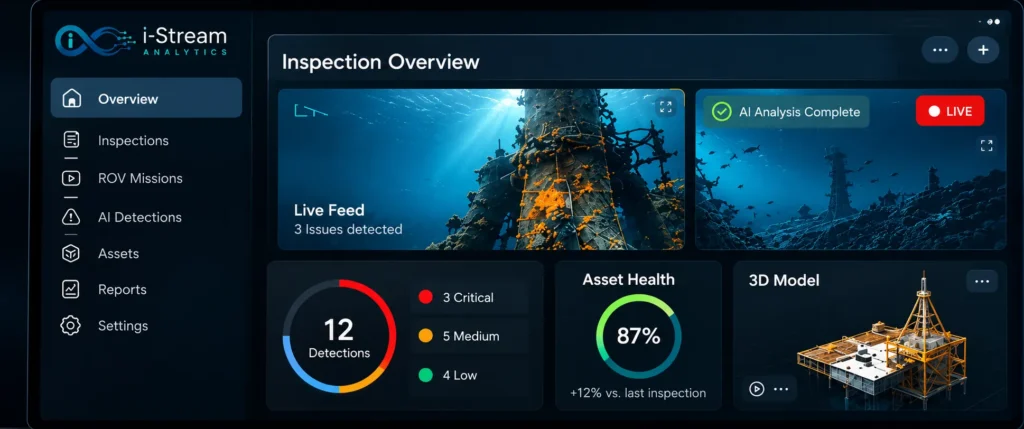
AI detections are grouped by severity alongside the live feed.
What AI does well
Computer vision models are well suited to the repetitive work of spotting known defect types. Trained on labelled inspection footage, they can flag likely issues as the video streams in:
- Corrosion, coating breakdown and cracks
- Marine growth and fouling levels
- Debris, damage and anomalies on subsea structures
- Changes compared with previous inspections
Keeping humans in the loop
The most effective systems treat AI as a first pass, not a final verdict. Every detection carries a confidence score, and experienced inspectors confirm, adjust or dismiss findings before they reach a report. Over time, that feedback makes the models better.
What's next
As detections are linked to 3D digital twins, teams can see exactly where an issue sits on an asset and how it has changed since the last inspection — turning a pile of video into a living record of asset health.
Head of AI at i-Stream Analytics. Builds the detection models behind every finding.